
Showing posts with label International Business. Show all posts

02 February 2009

Longer notice now needed for layoffs in NY

Post: Crain's NY
By:
Daniel Massey
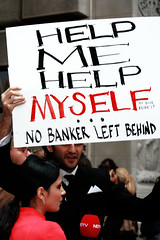
Photograph: A. Golden, eyewash design, c. 2009.

February 02, 2009 3:49 PM

Tougher new law requires 90 days notice before layoffs or closings – up from 60 days.

Just as job losses are mounting, thousands of private employers in New York must now give an even earlier heads up to workers of mass layoffs, plant closings and relocations.

The New York State Worker Adjustment and Retraining Notification Act went into effect Feb. 1 and is more expansive than the 20-year-old federal law that had previously set notification standards. Indeed, the New York law is considered the strictest in the country by some employment lawyers, who note that it applies to more employers, requires additional advanced notice and is more easily invoked than the federal WARN statute.

Employment lawyers and business advocates say the new set of rules come at the wrong time for businesses and make it harder for them to cope with the recession.

“In this economic climate, there are going to be a lot of companies that have to make changes for business reasons,” said attorney Marc Mandelman, co-chair of the Managing Change/Reductions in Force group at law firm Proskauer Rose. “These new deadlines will be extremely difficult to meet.”

The federal law required employers with 100 or more full-time employees to provide written notification of mass layoffs and closings, but the New York law applies to businesses with 50 or more full-time workers.

The new law also requires 90-day advance notice to employees and government officials, compared with 60 days in the federal rules.

And notification is now required when at least 25 employees lose their positions, if they make up one-third of the workforce, or when a company lays off at least 250 full-time employees. The federal WARN act is triggered when 50 workers who represent one-third of the workforce are let go, or if 500 workers are laid off.

The Business Council of New York State says some 13,000 small businesses that weren’t affected by the federal statute will now be covered by the state law. Many of them can’t afford to hire labor attorneys to assist with the process, the council argued.

“It makes it more difficult to do business in New York State,” said a spokesman for the group.

But a spokesman for the New York State AFL-CIO, which represents 2.2 million workers, said the law provides employees a much-needed cushion to help deal with the harsh effects of unemployment.

“Every day counts when you’re losing your job,” the spokesman said. “You have to pay the bills, pay the rent and provide for your family. Any extra time helps you deal with the horror of losing your job.”

The law empowers the State Department of Labor to hit violators with penalties of $500 per day and hold them liable for back pay and employee benefits. Under the federal law, redress is more limited.

Employers are exempt from the requirements if they can show unforeseen hardship or attempts to actively seek capital or business that would have prevented the layoff, plant closing or relocation.

But Gerald Hathaway, an employment attorney at law firm Littler Mendelson, says the exemptions don’t go far enough. New Jersey’s WARN law, for example, applies only to businesses that have been around for three years or more. He says startups and even Broadway shows now have to factor giving 90 days notice into their business plans.

“Any entrepreneur starting a business has to ask himself six months in, ‘Am I going to make it?’” Mr. Hathaway said. “If I don’t, now I’m on the hook for giving three months notice. It calls to question survivability.”


LET THE REVOLUTION BEGIN!

Thanks for all you do!
Live your values. Love your country.
And, remember: TOGETHER, We can make a DIFFERENCE!

FAIR USE NOTICE: This blog may contain copyrighted material. Such material is made available for educational purposes, to advance understanding of human rights, democracy, scientific, moral, ethical, and social justice issues, etc. This constitutes a ‘fair use’ of any such copyrighted material as provided for in Title 17 U.S.C. section 107 of the US Copyright Law. In accordance with Title 17 U.S.C. Section 107, the material on this site is distributed without profit to those who have expressed a prior interest in receiving the included information for research and educational purposes. If you wish to use copyrighted material from this site for purposes of your own that go beyond ‘fair use’, you must obtain permission from the copyright owner.

28 January 2009

Report: Wall Street bonuses decline 44%

UPDATE:
"Shameful." - Omaba comments on the irresponsibility of Wall Street bankers' who gave themselves $20 BILLION in BONUSES, same amount as 2004.


Original Post:
Crain's NY, January 28, 2009 7:13 AM

Photographs: A. Golden, eyewash design, c. 2009.

State Comptroller Thomas DiNapoli estimates that the securities industry paid its New York City employees $18 billion in bonuses for 2008, compared with nearly $33 billion in 2007.

(AP) - New York state will lose nearly $1 billion in revenues because cash bonuses to Wall Street employees declined 44% last year, according to a report state Comptroller Thomas DiNapoli issued Wednesday.

Mr. DiNapoli estimates the securities industry paid its New York City employees $18.4 billion in bonuses for 2008, compared with nearly $33 billion in 2007.

The drop in bonuses will cost New York City $275 million, Mr. DiNapoli said.

"The securities industry has already lost tens of thousands of jobs and the industry is still continuing to write off toxic assets," Mr. DiNapoli said in a written statement. "It's painfully obvious that 2009 will probably be another difficult year for the industry."

He evaluated personal income tax collections and other factors, including industry revenue and expense trends.

The decline is the largest on record in dollars and the largest percentage decline in more than 30 years, but the bonus pool is still the sixth largest on record.

Before the financial crisis, business and personal income tax collections from Wall Street activities accounted for up to 20% of state tax revenues and 12% of New York City tax revenues.

The average bonus declined by 36.7% to $112,000 in 2008. The decline in the average bonus was smaller than the decline in the bonus pool because the pool was shared among fewer workers as the industry shed jobs.

It's important to make sure the federal bailout packages aren't paying for corporate jets, pay dividends or executive bonuses when the economy is suffering to this extent, Mr. DiNapoli said.

"Taxpayers have invested billions of dollars to stabilize the nation's banks and financial institutions and there are plans to make additional investments to shore up the banking system," Mr. DiNapoli said. "There needs to be greater transparency and accountability in the use of these funds. Every dime counts."

Mr. DiNapoli also estimated that the traditional broker and dealer operations of the member firms of the New York Stock Exchange lost more than $35 billion in 2008. Industry losses were actually much greater when other business services, such as mergers and acquisitions, were factored in.

Employment in the securities industry in New York City declined from 187,800 in October 2007 to 168,600 in December 2008, a loss of 19,200 jobs.


LET THE REVOLUTION BEGIN!

Thanks for all you do!
Live your values. Love your country.
And, remember: TOGETHER, We can make a DIFFERENCE!

FAIR USE NOTICE: This blog may contain copyrighted material. Such material is made available for educational purposes, to advance understanding of human rights, democracy, scientific, moral, ethical, and social justice issues, etc. This constitutes a ‘fair use’ of any such copyrighted material as provided for in Title 17 U.S.C. section 107 of the US Copyright Law. In accordance with Title 17 U.S.C. Section 107, the material on this site is distributed without profit to those who have expressed a prior interest in receiving the included information for research and educational purposes. If you wish to use copyrighted material from this site for purposes of your own that go beyond ‘fair use’, you must obtain permission from the copyright owner.